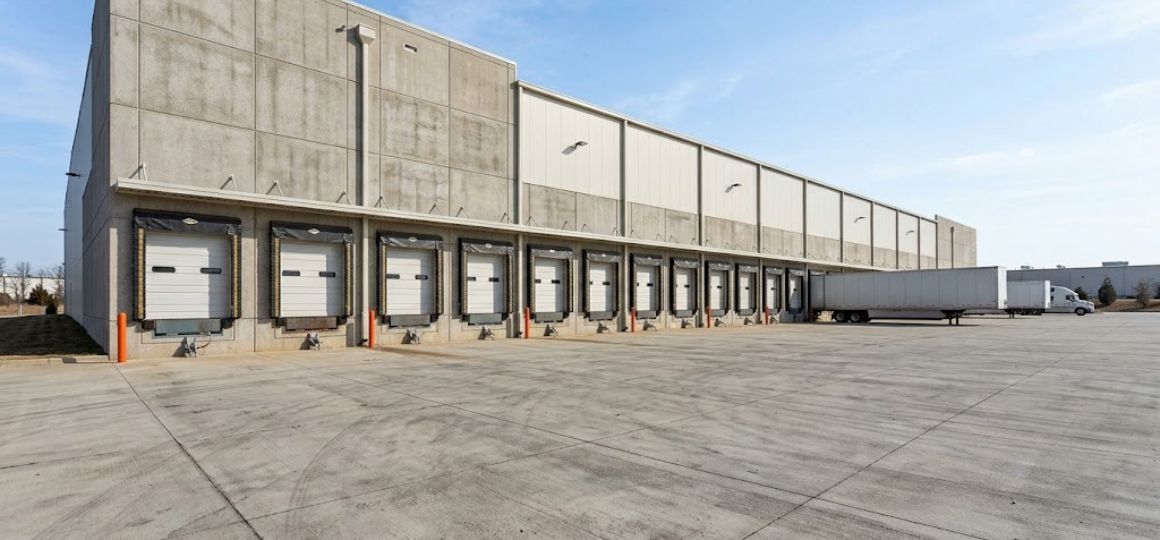
How the furniture market cycle creates rodent pressure spikes
High Point's furniture market operates on a twice-annual cycle — spring market in April and fall market in October — that creates a distinct rodent pressure pattern unlike standard commercial facilities. Between market periods, showrooms and storage facilities sit largely dormant: low foot traffic, minimal receiving activity, and extended periods of undisturbed interior space. Norway rats establish harborage in pallet storage during these quiet periods, undisturbed by the human activity that would normally deter them from interior spaces.
When market opening approaches, receiving activity intensifies and loading dock doors open for extended periods during setup weeks. This happens to coincide with two of the highest-pressure periods in the Piedmont Triad rodent calendar: spring market in April follows the peak of Norway rat spring breeding, and fall market in October falls directly in the September–December peak pressure window for both Norway rats and roof rats. The market calendar and the rodent calendar overlap in the worst possible way.
The result: furniture market facilities that don't have active pre-market rodent programs discover infestations during setup week, when addressing them is maximally disruptive. A pallet of upholstered goods with rodent damage discovered on market opening day is a problem with no good solution at that point. The time to address it was 3–4 weeks before market opens.
Why loading docks are the primary risk point in High Point warehouses
Loading docks in High Point furniture warehouses face the same dynamics as warehouse loading docks anywhere — dock-plate gaps, aging door brush seals, dock-side dumpster adjacency — but with the additional factor that dock doors stay open for extended periods during market setup receiving. Extended open dock doors in October, which is peak Norway rat pressure season, is essentially an open invitation.
Norway rats that have been colonizing the dock-side perimeter during the between-market dormancy period find the opening and establish interior territory quickly during the receiving intensity of setup week. By the time the market opens, the interior population is established and visible — to buyers, to press, and potentially to third-party food-safety auditors if the facility handles anything with food-safety requirements.
The dock assessment we conduct for High Point warehouse accounts covers: dock-door brush seal condition (minimum 3/4-inch gap free at the threshold), dock leveler plate clearance (Norway rats enter under dock plates when the plate-to-floor gap exceeds 3/4 inch), dock-side dumpster distance and configuration, and exterior bait-station coverage at all dock entries. The dock is where the program needs to be densest, because the dock is where the exposure is highest.
Documentation for furniture market facilities — what third-party audits require
Furniture market facilities that also handle any food product, or that are evaluated by third-party auditors for retailer certification programs, face documentation requirements beyond standard commercial pest control. Audit programs like SQF, BRC, and AIB require at minimum: a current service contract with a licensed pest control operator, service logs documenting each visit with station-by-station activity records, a site map showing bait-station placement and numbering, product data sheets for all rodenticides in use, and evidence that pest control records are reviewed by management regularly.
We format all High Point warehouse service documentation to meet audit program requirements. The site map is provided at setup and updated when station placement changes. Service logs are provided after each visit with station numbering keyed to the site map. Product SDS documents are provided at setup and updated when formulations change. Quarterly trend reports — bait consumption by station over time — are provided for accounts that request them for management review purposes.
The pre-market service visit — what it covers and why the timing matters
For High Point market-district accounts, we schedule a pre-market service visit 3–4 weeks before each market opening — typically mid-March for spring market and mid-September for fall market. This timing accomplishes three things: it catches any population that established during the between-market dormancy period before it reaches market-opening density, it refreshes bait in all exterior stations to maximum coverage before the peak pressure of setup week, and it produces fresh service documentation that confirms active pest management was in place before market opening.
The pre-market visit covers: full interior sweep for droppings evidence, nest sites, or visible rodent activity in pallet storage and receiving areas; dock assessment for any new gap conditions that developed since the prior visit; bait station inspection and replenishment across all exterior perimeter stations; interior mechanical snap-trap check and reset; and documentation update. The visit is structured to be completed before normal market-setup activity begins — we schedule it to avoid disrupting the receiving teams.
Call (844) 635-0403 to establish a High Point furniture market account with pre-market service visits on both the spring and fall calendar. We know the market district and we'll build a program around the market cycle, not a generic commercial template.
Furniture market week — what changes for warehouse rodent protocols
The 8–10 days of furniture market itself (typically the third week of April and the third week of October) create operational conditions that warrant adjusting standard rodent-control protocols. Three changes worth noting for warehouse operators:
Increased foot traffic in normally-controlled spaces. Buyers, designers, and trade press move through display showrooms and back-of-house warehouse spaces that are typically restricted. The standard bait stations and trap placements that work fine when only employees access these spaces can become liability exposures during market — a buyer tripping over a station, a designer photographing a station in a published trade article. Operators should walk the public route of their facility with their pest control provider 2 weeks before market and identify any visible station or trap placements that should be relocated or temporarily concealed.
Loading-dock activity spikes. The 10 days of market generate the highest sustained loading-dock traffic of the year — inbound shipments still arriving, completed sales being staged for transit, buyers arriving with trucks for immediate pickup. The increased volume means dock doors stay open longer than during normal operations, creating elevated rodent ingress opportunity. Standard practice is to add temporary visual monitoring (no trap activation needed, just observation) at primary dock zones during market for early detection if anything does get in.
Documentation review by potential buyers. Some institutional buyers (national retail chains, hotel/hospitality designers, government procurement) include facility hygiene documentation review as part of their vendor qualification process — and market week is when those reviews often happen. Operators who can produce current pest control service logs, EPA-compliant station maps, and recent inspection reports without scrambling have a real competitive advantage during the moments those documents get requested.
The audit chain — third-party verifiers operators should know about
Beyond Guilford County Environmental Health (which inspects food service, not furniture warehousing directly), several third-party audit bodies routinely verify pest control documentation at High Point furniture facilities. Operators sometimes encounter these verifications as a surprise during a customer audit; understanding them in advance helps prepare:
AIB International audits — used by some institutional furniture buyers who also stock food-adjacent products (display kitchen retailers, hospitality buyers procuring for hotel dining rooms). AIB audits look at pest control history with the same detail as food-facility audits: service log completeness, station inventory accuracy, trend analysis showing population reduction over time, and documented response to any positive findings.
NSF GMP audits — increasingly common for furniture facilities supplying healthcare environments (hospital furniture, long-term-care procurement). Look at sanitation program integration, including pest control as a component, and verify written SOPs are followed in practice.
Customer-specific protocols — major retailers (Wayfair, Williams-Sonoma, IKEA, government procurement) sometimes layer their own facility verification on top of standard audits. The questions vary, but pest control documentation is almost always reviewed.
The common thread across all of these is that they want to see continuity — not just current good records, but a multi-year history of consistent monitoring, consistent documentation, and consistent response to findings. A facility that just started a pest control program three months before audit appears suspect; a facility with eight years of unbroken service logs reads as professionally managed. The pest control relationship is one of the easier audit-prep components to get right if it's set up properly from the start.
What a properly-structured warehouse rodent program looks like financially
For High Point furniture warehouse operators planning budget, here's the realistic cost structure for a fully-compliant program at a typical facility (200,000–400,000 sq ft):
Initial assessment and program setup: $1,500–$3,000 one-time. Covers full facility walk-through, station inventory and placement mapping, baseline documentation, and program SOP development tailored to the facility's specific layout and risk profile.
Standard monthly monitoring: $600–$1,200 per month. Covers monthly station service, log update, trend documentation, and standing on-call availability for unscheduled events. This is the recurring backbone.
Market-week service enhancement: $400–$800 per market window (so $800–$1,600 per year, twice annually). Covers pre-market walk-through, temporary placement adjustments, daily check-in during market, and post-market reassessment.
Annual reset and audit prep: $500–$1,000 once per year. Covers comprehensive facility re-survey, documentation cleanup and reformatting for audit presentation, replacement of degraded stations, and renewal of the program SOP.
Total annual cost for a properly-structured program at a typical facility: $10,000–$18,000. Compared to the cost of a failed audit (potential loss of a major buyer, revocation of a hospital procurement relationship, or in extreme cases facility-level closure), the program cost is small operational insurance.
Related services
For High Point furniture warehouse operators planning defensible programs, the directly applicable services are:
Rodent problem in Greensboro or Guilford County?
Free inspection, same-day dispatch available, written quote before any work starts. Licensed in North Carolina. Open 24/7.
Call (844) 635-0403