Dead rodent removal in Greensboro, NC
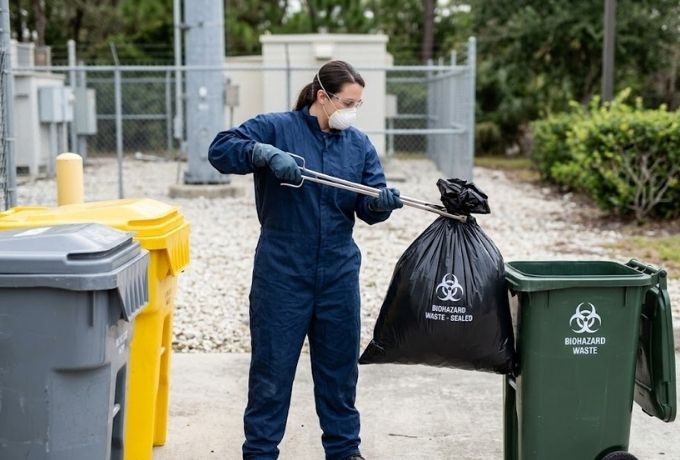
A dead rat or mouse in a wall cavity, attic, or crawl space produces an unmistakable decomposition odor that intensifies for 1–3 weeks before beginning to fade. The smell is difficult to localize from inside the living space, the carcass is often inaccessible without knowing exactly where to look, and standard odor-masking products don't address the source. Dead rodent removal is a localization-and-extraction service — we find the carcass using odor mapping, remove it through the least-invasive access point, and treat the cavity with enzymatic deodorizer.
The localization challenge in Greensboro homes
Our localization method: we move through the affected area systematically, identifying where the odor is strongest at wall surfaces, ceiling surfaces, and floor-level outlets and penetrations. We use moisture meter readings to detect decomposition-related moisture in wall cavities — a decomposing carcass increases local wall-cavity humidity in a detectable pattern. We probe accessible cavities with a thin probe through vent openings or outlet boxes before recommending any access-hole cutting. In most cases, we locate the carcass within 30 minutes of starting the localization process.
Access is always the least-invasive option that reaches the carcass: an existing outlet box or wall vent is the first choice, an accessible attic or crawl-space entry is the second, a small access hole in a low-visibility location (inside a closet, behind a door) is the last resort. We never cut a large opening speculatively. After extraction, the cavity is treated with enzymatic deodorizer, and we provide a written assessment of the entry point that placed the rodent in the wall — because a dead rodent in a wall means a live rodent got there through an unsealed entry.
Wall cavity — accessible via outlet or vent
Localize via odor mapping, extract through existing outlet box or vent opening, treat cavity with enzymatic deodorizer, replace cover. Most efficient extraction scenario.
Wall cavity — requires access hole
Localize precisely, cut minimal access hole in low-visibility location (closet wall, behind door), extract carcass, treat cavity, close access. We don't repair drywall — we close the access cleanly and recommend a drywall contractor for cosmetic repair if the location is visible.
Attic carcass
Most accessible dead-rodent scenario — enter attic, locate carcass visually or by odor concentration, extract in sealed bag, treat area with enzymatic deodorizer. Structural inspection for any decomposition-related damage.
Crawl-space carcass
Enter crawl space, locate by odor and visual inspection, extract in sealed bag, antimicrobial treatment of the extraction site and adjacent surfaces. Vapor barrier condition assessed if decomposition liquid has contacted the barrier.
Dead rodent smell in your Greensboro home? Call (844) 635-0403
We locate, extract, and deodorize — and identify the entry point so the next rodent doesn't end up in the same place. 24/7 response for strong odor situations.
Call (844) 635-0403Dead rodent removal cost in Greensboro
Attic / crawl-space extraction
Localization, extraction, and enzymatic treatment in accessible attic or crawl-space locations.
Wall cavity — accessible
Localization and extraction via existing outlet or vent opening. Enzymatic deodorizer treatment included.
Wall cavity — access hole required
Localization, minimal access opening, extraction, deodorizer treatment, and access closure. Drywall repair not included.
All dead rodent removal includes entry-point assessment and written recommendation. Emergency same-day response available for severe odor situations.
Why dead-rodent odor in a Greensboro home is so hard to locate
The most consistent frustration we hear from homeowners calling about dead rodent odor: the smell seems to come from everywhere and nowhere, and the room where it's strongest changes from day to day. This isn't perception error — it reflects how decomposition gases actually move through residential structures.
A decomposing rat or mouse in a wall cavity releases volatile organic compounds (VOCs) — primarily putrescine, cadaverine, and sulfur-containing molecules — that diffuse through the cavity space and migrate through every available pathway. In a typical Greensboro home, those pathways include the cavity itself (vertical and horizontal travel through wall framing), electrical outlet and switch boxes (gaps around the box housings let cavity air into the room), recessed light fixtures (a direct path from ceiling cavity to room), HVAC return register seams (air pulled toward the return brings odor with it), and floor-wall junctions where baseboards don't seal tightly.
The result: the strongest odor in a room may be 8–12 feet from where the carcass actually is. Homeowners who chase the smell by intuition often end up looking in completely wrong locations — bathrooms when the source is in a bedroom wall on a different floor, kitchens when the source is above the garage ceiling. We've responded to calls where the homeowner had cut three small inspection holes in the wrong locations before calling for professional help. The holes were drywall damage with no benefit.
How we localize a dead rodent without unnecessary wall damage
Our dead-rodent location protocol minimizes drywall damage by working through detection rather than exploration. Four techniques used together typically pinpoint the carcass within a 1–2 foot zone before any access opening is created:
Systematic odor mapping — moving through every room, every closet, and every utility area on each floor, rating odor intensity on a 1–10 scale at multiple points per room, paying attention to outlet boxes and floor-wall junctions where cavity air enters living space. This produces a heat-map of where the cavity odor source most likely is.
Air-current correlation — running the HVAC system fan continuously and watching how the odor map shifts. Cavity carcasses connected to return-air pathways move odor predictably when the system runs. The shift pattern often reveals which side of the wall and which floor level the source is on.
Outlet-box endoscope inspection — for suspected wall locations, removing the outlet plate and using a flexible inspection camera to view the cavity interior. This is a 5-minute task that often resolves the location question without any drywall opening at all.
Attic and crawl-space access — for ceiling-area suspicions, accessing the attic and looking down between joists from above; for floor-level suspicions, accessing the crawl space and inspecting from below. Many dead rodents are in spaces accessible from existing structural access points, not behind drywall at all.
Wall opening — when it's actually necessary — is then targeted to a specific 4-inch access cut at the carcass location, made in an inconspicuous spot when possible, repaired by the homeowner's drywall contractor (we don't do drywall repair, and we say so upfront).
Dead rodent removal FAQ
How long does dead rodent smell last if I don't remove the carcass?
The odor from a dead rat typically peaks at 1–2 weeks as decomposition is most active, then gradually decreases over 3–6 weeks as the carcass desiccates. A dead mouse produces a shorter, less intense odor that typically clears in 1–3 weeks. The smell doesn't disappear — it diminishes to a lower background level that can persist for months in warm, enclosed cavities. Extraction eliminates the source rather than waiting for it to resolve.
Will the dead rodent smell go away on its own?
Eventually — but the timeline is 3–8 weeks for a rat and 1–4 weeks for a mouse, during which the odor is often strong enough to be disruptive in the living space. Enzymatic deodorizer applied after carcass extraction substantially accelerates odor resolution by breaking down the decomposition compounds rather than just masking them. We recommend extraction over waiting in almost every case.
How much does dead rodent removal cost in Greensboro?
Attic and crawl-space extraction runs $175–$350. Wall cavity extraction via existing access runs $250–$450. Wall cavity requiring access opening runs $350–$650. Emergency same-day response for severe odor situations available. Call (844) 635-0403.
How long will the smell continue after I remove the dead rodent from my Greensboro home?
Once the carcass is removed and the cavity is treated with enzymatic deodorizer, most residual smell clears within 3–7 days. For situations where the carcass had been decomposing for several weeks before removal, residual smell can persist 10–14 days as cavity surfaces continue to release absorbed compounds. Running ceiling fans and air movers in affected rooms accelerates this — the goal is air exchange, not masking. If smell is still present after 14 days post-removal, the most likely explanation is a second carcass in a different cavity location that the original localization missed. We come back at no charge for confirmation in those cases.
Is there a smell-free way to wait out a dead rodent in a Greensboro wall?
Not really. The decomposition process takes 3–6 weeks for a rat and 1–3 weeks for a mouse to complete to the point where odor reduces meaningfully on its own. Through that period, ammonia-based and sulfur-based compounds continue to be released. Air fresheners and ozone generators mask but don't eliminate the source. The honest answer for most homeowners is that locating and removing the carcass is significantly less disruptive than waiting six weeks for nature to take its course — particularly in summer heat when decomposition is fastest and odor most intense.
What if you can't find the dead rodent in my Greensboro home — what happens then?
It happens occasionally — the carcass is in a cavity we can't access without significant structural opening, or the decomposition stage has moved past the high-odor phase to dry-out, where detection becomes harder. In those situations, we're upfront about it: we'll explain what we found, what the limitations were, and what the realistic options are (continued waiting, more invasive access exploration, environmental controls to manage the symptoms while the remaining decomposition completes). We don't charge for dead-rodent location service if we don't successfully locate. That's our standard policy.