Rodent bait station installation in Greensboro, NC
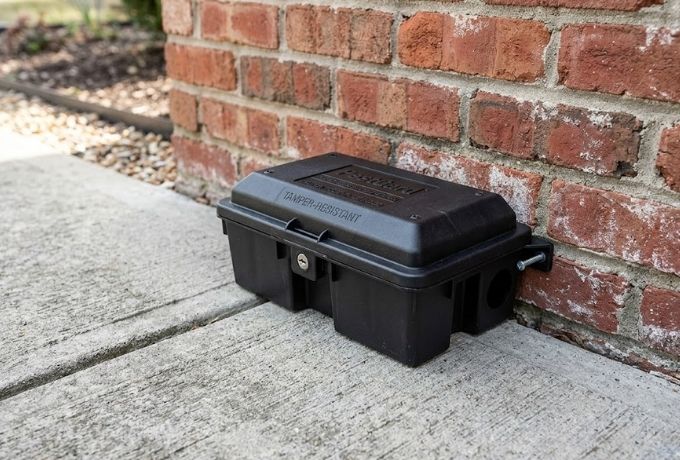
Bait stations are the perimeter component of a rodent control program — not a standalone solution, but an essential tool for keeping Norway rat colonies from establishing adjacent to structures. EPA-mandated tamper-resistant housings, label-compliant placement, and documented service logs are the three requirements for any legal and effective bait-station program in North Carolina. We install and monitor to all three standards.
Where bait stations belong and where they don't
Tamper-resistant exterior bait stations placed at the building perimeter work by intercepting Norway rats as they travel from their burrow network toward the structure. A rodent that feeds on a bait station doesn't make it back to the burrow — it dies in the open, where it's recoverable and where secondary poisoning risk to raptors is minimized by the sub-lethal dose it consumed. This is the population-reduction function of bait stations: maintaining pressure on the colony that sustains the perimeter population.
For residential properties, 2–4 stations at foundation corners and near any known travel routes is the standard program. For commercial properties — restaurants, warehouses, storage facilities — station density scales with perimeter length and pressure level. We provide a site map showing every station location and number, updated when placement changes.
Perimeter assessment
Walk the full property perimeter. Identify Norway rat travel routes, burrow areas, storm-drain adjacency, and harborage. Station placement follows rodent behavior, not convenience.
Station installation
Place tamper-resistant stations per EPA label requirements — against vertical surfaces (building foundation or fence line), secured against movement, not in open areas where non-target animals can access them from above.
Initial bait load & documentation
Load each station with EPA-registered rodenticide, document station numbers and placement in a site map. Product data sheets provided at installation. Service log initiated.
Monitoring & replenishment
Monthly or bi-monthly visits — open each station, assess bait consumption, replenish, and document by station number. Elevated consumption flags active travel routes for follow-up.
Bait station program in Greensboro? Call (844) 635-0403
Residential and commercial bait-station installation with EPA-compliant placement and full service documentation. Free perimeter walkthrough before quoting.
Call (844) 635-0403Bait station installation cost in Greensboro
Residential setup
2–6 exterior stations with initial bait load, site map, and product documentation. Standard residential perimeter.
Residential monitoring
Monthly station inspection, bait replenishment, and service log update. Ongoing residential accounts.
Commercial setup
Quoted by station count and perimeter scope after walkthrough. Includes site map and documentation package.
All bait-station programs include service logs, product data sheets, and site map. Free perimeter walkthrough, written quote before installation.
EPA rodenticide rules every Greensboro property owner should understand
Rodenticide use in North Carolina is governed by federal EPA regulations enforced through the NC Department of Agriculture's Structural Pest Control division. The rules changed significantly in 2008 (and updated since) — and a lot of older information online is no longer accurate.
The current framework, summarized: second-generation anticoagulants (the most effective rat bait active ingredients — brodifacoum, bromadiolone, difenacoum, difethialone) are restricted-use pesticides. Homeowners cannot legally buy them at retail. They can only be applied by licensed pest control operators using tamper-resistant bait stations placed per label requirements.
What's available at Home Depot and Lowe's is first-generation anticoagulant bait (warfarin, chlorophacinone, diphacinone) — less acutely toxic, requires multiple feedings over several days, and rats can develop resistance to it. It's legal for homeowner use but markedly less effective for established Norway rat infestations.
The practical consequence: if you have a real Norway rat problem in Greensboro, the bait that will reliably resolve it isn't available to you over the counter. It's available only through a licensed applicator like us, placed only in EPA-compliant tamper-resistant stations, documented in service logs that satisfy state inspection requirements. This isn't a sales pitch — it's the regulatory reality of rodenticide use in NC.
Why station placement matters more than the bait itself
A bait station with excellent bait placed in the wrong location does nothing. The bait can be EPA-approved, fresh, in a fully compliant station — and if rats aren't traveling within 5 feet of it, they'll never feed from it. Placement strategy is what makes a bait-station program work.
Norway rats are creatures of routine — they travel the same paths repeatedly, hugging vertical surfaces (foundation walls, fence lines, hedge edges) rather than crossing open ground. Effective station placement follows those travel paths, not the property owner's intuition about where stations should go.
What that means in practice for Greensboro properties: stations against the building foundation (not free-standing in the yard), positioned near identified rodent travel evidence (grease marks on the foundation, established burrow openings, gnaw marks at sill plates), with additional stations at known food-source proximities (dumpster enclosures for commercial, compost bins for residential, garage areas with stored pet food). We document each station's placement with a numbered site map so service visits and any follow-up by another operator can match station numbers to physical locations without ambiguity.
Bait station installation — FAQ
What is a tamper-resistant bait station and why does it matter?
A tamper-resistant bait station is an EPA-mandated housing for second-generation anticoagulant rodenticides. Federal law requires these housings for any bait placed outdoors or in areas accessible to children and pets. The housing physically prevents access to the bait except by rodents that can navigate the internal tunnel. Loose bait placement without a station housing is illegal under current EPA regulations for most rodenticide formulations and creates secondary poisoning risk for raptors, pets, and wildlife.
How many bait stations does my Greensboro property need?
For residential properties, 2–6 exterior stations at the building perimeter cover most situations. For commercial properties, the standard is one station per 50–75 linear feet of exterior perimeter, plus additional stations at dock entries and dumpster enclosures. We size the station count based on a perimeter walkthrough and document placement in a site map.
Are bait stations safe around children and pets?
Yes — when correctly specified and placed. Tamper-resistant stations are designed so that children and dogs cannot open them or access the bait inside. We place stations against the building foundation or in areas that limit incidental contact, and we never place interior bait stations in living areas or pet-accessible spaces.
How much does bait station installation cost in Greensboro?
Residential exterior bait station installation runs $150–$350. Monthly monitoring for residential accounts runs $50–$100/month. Commercial programs are quoted by station count after a perimeter walkthrough.
How do I know if a bait station program is actually working in Greensboro?
Three indicators we look for at every monitoring visit: bait consumption pattern (rapid consumption at first followed by tapering off as the population shrinks is the right curve; sustained heavy consumption month after month means the source population isn't being reduced), reduction in indoor activity reports from the property, and reduction in fresh evidence at exterior foraging points (droppings near stations, fresh grease marks on foundation). We document each of these in the service log and review trends quarterly with commercial accounts.
Can bait stations harm pets, hawks, or owls?
Direct pet access — no, when properly installed. EPA-compliant tamper-resistant stations are designed so children, dogs, and cats cannot access the bait inside. The legitimate concern is secondary poisoning: a rat that consumes anticoagulant bait, then leaves the station to die in the open, can be consumed by a raptor or scavenger that takes in the bait residue. This is a real risk that responsible operators manage by retrieving carcasses where possible, using bait formulations with lower secondary-toxicity profiles where appropriate, and avoiding heavy bait deployment in areas with significant raptor activity. We discuss this on every initial walkthrough.
How often should bait stations be serviced in Greensboro?
For commercial accounts under active monitoring — monthly is standard, sometimes every two weeks during peak fall pressure or after an infestation event. For residential maintenance programs (occasional Norway rat pressure, no active infestation) — quarterly is sufficient. Bait degrades from moisture and temperature over time even when uneaten, so the station can't just be loaded once and left for a year. Fresh bait at each visit is part of why monitoring matters.